A cat can have several color names without changing a single hair. One breeder calls the coat “sunshine,” another calls it “copper,” and a third says “golden chinchilla.” Someone else calls it “wideband.” Then a pedigree or show entry uses yet another term. It is easy to see why these conversations become confusing.
The problem is not necessarily that somebody is wrong. We are often answering different questions: What does the coat look like? What genetic change might help produce that look? And how does a registry record it? Those answers overlap, but they are not interchangeable.
This is a breeder’s guide to separating those questions. CORIN is important, but it is not a universal replacement for the words golden, shaded, shell or chinchilla—and the look of a cat is not a DNA result.
Same cat, five names: start with what each name means
In everyday British Shorthair and British Longhair conversations, “golden” is often a broad description of a warm-looking coat. “Shaded” and “shell” describe how much darker pigment is visible toward the ends of the hairs. “Copper” and “sunshine” have also been used for particular wideband-looking cats, especially in British and Siberian lines. “CORIN,” by contrast, is the name of a gene. Mixing those levels creates arguments that a photo or a single pedigree code cannot settle.


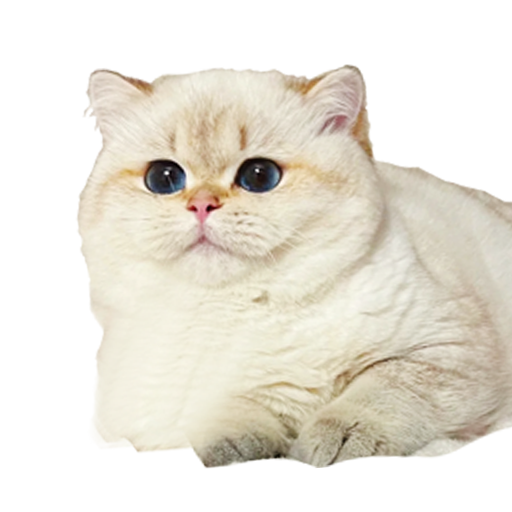
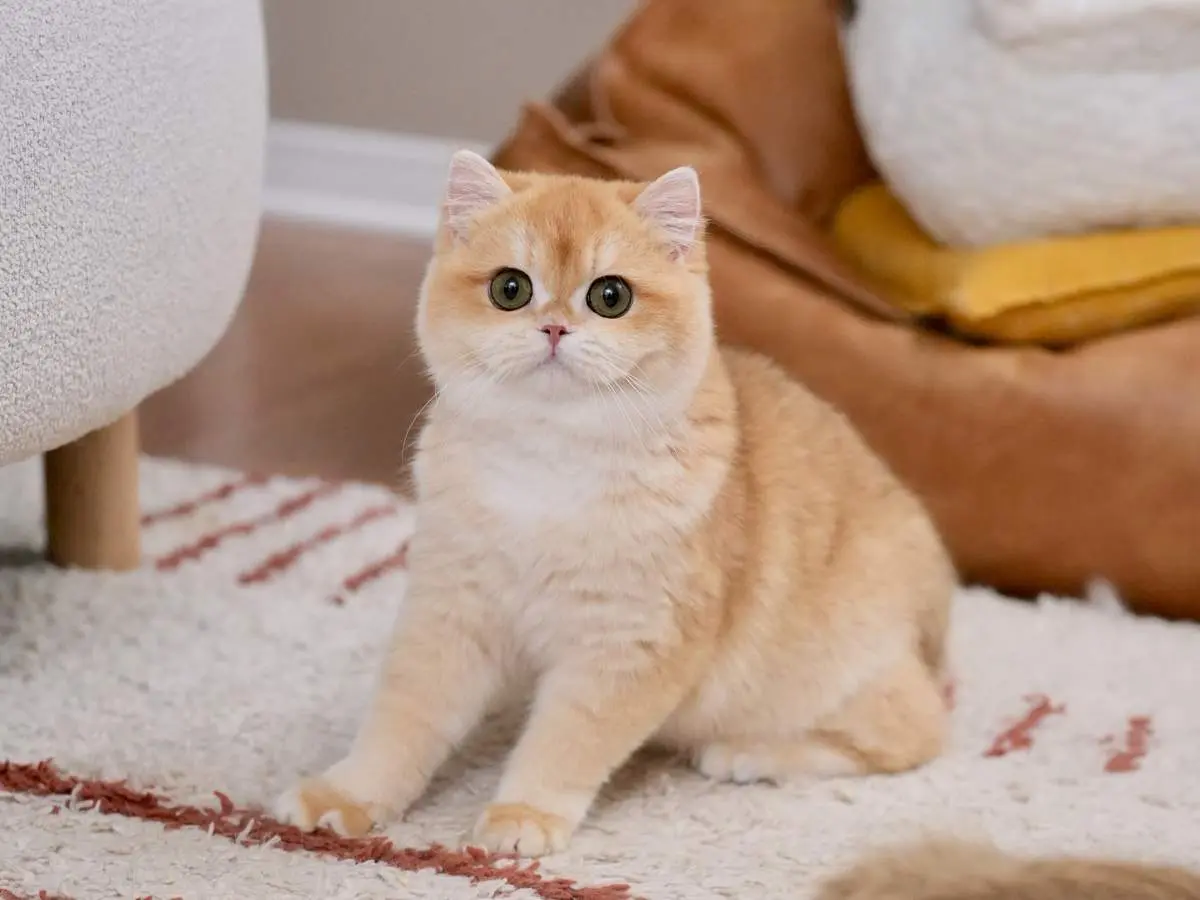
These are BearMary coat photographs from the original draft, retained as visual examples. The photos are not evidence that any pictured cat carries a particular CORIN variant.
Three useful ways to describe a coat
I find it more useful to separate a coat into three descriptions rather than force everything into one fashionable name. These are practical ways to talk about appearance and genetics, not three completely independent biological pathways.
1. Pattern: agouti, tabby and the markings you can see
The agouti system helps determine whether hairs alternate between dark eumelanin and lighter red-yellow pheomelanin. An agouti cat can show tabby markings, including classic (blotched), mackerel, spotted or ticked patterns. In non-agouti cats, the usual banded tabby pattern is largely masked by a solid-looking coat. Red and cream coats need special treatment because they can show visible markings regardless of the usual agouti classification.
The tabby pattern on the body is not the same question as the proportions of dark and light pigment inside an individual hair.
2. Tipping: how much dark pigment remains near the hair end
Shaded and shell are descriptions of the finished coat. A shell or chinchilla look usually has very little dark tipping, while a shaded coat has a more noticeable veil of pigment. The exact amount, distribution and permitted appearance depend on the registry and breed standard; a number such as 11 or 12 in an EMS-style code is not the name of one gene.
For photographs and the common British color-code shorthand, see our Golden British Shorthair guide and British Shorthair & Longhair shaded-colors guide. They explain appearances; this article explains why appearances should not be treated as proof of a particular CORIN genotype.
3. Modifiers: why the pigment bands may change
A modifier can affect where pigment appears or how long one pigment-producing phase lasts. CORIN belongs in this discussion, alongside other pathways that influence coat appearance. Silver (the inhibitor trait), temperature-sensitive point coloration and base-color dilution can affect what we see too, but they are not all the same genetic process as CORIN.
That is the useful part of the three-layer approach: a cat can have a tabby pattern, a shaded-looking coat, and a genetic modifier at the same time. No one term has to explain all three.

What CORIN actually does
Agouti hairs develop dark and light bands as a hair grows. ASIP (agouti signaling protein) helps shift pigment production away from dark eumelanin toward yellow-red pheomelanin. ASIP acts through the melanocortin-1 receptor pathway, involving MC1R. CORIN encodes a protease that normally limits ASIP signaling; when certain CORIN variants reduce that limiting effect, the lighter band can extend farther along the hair and dark pigment may be confined to a smaller tip.
This is not just a naming theory. Work in mice established CORIN as a modifier of the agouti pathway; a 2023 bioRxiv preprint reported experimental evidence that CORIN can directly cleave ASIP. That molecular mechanism is strong biological context, although a particular cat’s finished coat still depends on its broader genetic background. Saying “CORIN and ASIP both bind MC1R” would be misleading: ASIP acts at MC1R, while CORIN acts on ASIP.
Think of one growing agouti hair as a short timeline. A normal dark phase gives way to a lighter phase and then may return to dark pigment. A CORIN-associated wideband change can extend the lighter portion and leave less dark color near the tip. That helps explain some striking warm coats, but it cannot identify the exact variant in a cat just by looking.

Different CORIN variants, different evidence
Siberian sunshine and extreme sunshine
A 2021 study associated the recessive CORIN:c.2383C>T variant with the Siberian sunshine phenotype. A 2022 follow-up investigated an additional variant, CORIN:c.839G>A, in extreme-sunshine Siberians, including cats with more than one variant in the same gene. These findings show why “sunshine” is not a universal genotype that can simply be transferred to every breed.
The British copper study—and what it does not prove
In Abitbol, Dargar and Gache’s 2022 study, researchers identified CORIN:c.2425C>T (predicted protein change p.Arg809Ter) in British cats with a distinctive copper phenotype. All 30 copper cats in the reported group were homozygous for that variant. Twenty British control cats were heterozygous, and the variant was not found in the additional sampled comparison datasets described in the paper. The family evidence was consistent with recessive inheritance.
That is substantial evidence for a British copper-associated CORIN allele, often discussed as wbBSH. It is not evidence that every golden, golden shaded or golden point British Shorthair carries c.2425C>T. The study did not genetically classify all cats marketed or registered as golden, and absence of one tested allele does not explain every other route to a warm-looking coat.
The variants studied in Siberian and British populations should not be collapsed into one “golden gene.” Recessive inheritance applies to the specific studied variants and combinations described in the papers; the same inheritance prediction must not be assumed for every warm coat or uncharacterized wideband line.
Golden, copper, sunshine, shaded and shell are not synonyms
Golden is a useful color-family or phenotype word, but it is not a positive genetic test. Traditional golden coats and genetically defined CORIN-associated appearances are not automatically the same category.
Copper has been used for an extreme-looking warm British phenotype linked in the 2022 research to a specific CORIN variant. Without a relevant test and adequate records, the visual nickname alone is not proof of that variant.
Sunshine refers particularly to Siberian color presentations studied with specific CORIN variants. The name should not be applied to British cats as though it identifies the same allele.
Shaded, shell and chinchilla speak mainly to visible tipping or a recognized descriptive pattern. They do not identify which gene produced the look.
Silver CORIN is possible in registry descriptions: the silver inhibitor trait and a CORIN-associated modifier affect different aspects of the coat. TICA describes CORIN silver appearances separately from CORIN gold. And “carnelian” or “copal” should not be confused with CORIN; TICA distinguishes those terms as an MC1R-related mechanism.


How TICA and FIFe record CORIN
TICA: color descriptions and breed-specific show eligibility
TICA’s Uniform Color Descriptions, Version B (June 15, 2026) describes CORIN gold, CORIN silver and associated pointed presentations in its Agouti Shift Modifiers section. TICA also explicitly distinguishes CORIN from Carnelian/Copal. Its British Breed Group standard, revised May 1, 2026 permits CORIN within specified tabby and silver/smoke divisions, including the corresponding with-white divisions. That is a show-rule and phenotype-description framework—not a DNA certificate for an individual cat.
FIFe: the u modifier and the July 1, 2026 change
FIFe uses u as its EMS code for CORIN, distinct from y for golden and s for silver. The pattern codes 11 (shaded) and 12 (shell) remain separate. Thus BSH nu 12, when correctly assigned under FIFe rules, describes a black CORIN shell British Shorthair; it is an illustrative registration code, not a finding about any BearMary cat. Read the current FIFe EMS reference and Breeding & Registration Rules §5.1.2.4 for the formal requirements.
The date matters. As of July 1, 2026, FIFe fully recognizes specified CORIN varieties in British Shorthair, British Longhair, Siberian and Neva Masquerade. This replaced their earlier preliminary-recognition status. It did not mean every imaginable combination became recognized in every breed: the British standard provides the applicable recognized-variety table, and Kurilian Bobtail CORIN remains non-recognized in FIFe.
FIFe’s current rules also separate genotype recording from visible expression. In non-agouti cats and in red/cream cats, certain u-containing codes can be used to register genotype under the rules without claiming the CORIN phenotype is visible. In other words, even a registry’s code can have a precise administrative meaning that differs from a coat description.
What a DNA result can—and cannot—tell you
A well-identified laboratory result can tell you whether the tested sample carries the specific variant tested, and whether the result is reported as one or two copies. With relevant pedigree information, that can support inheritance predictions for that allele. It does not by itself establish every aspect of the finished coat, certify an EMS or TICA show classification, or prove that the cat visually matches a standard.
A negative result for one CORIN variant means that variant was not detected by that assay; it is not a universal “not golden” result. And a photograph, however good, cannot establish a CORIN genotype. If a color claim depends on genetics, ask which variant was tested, whether the panel covers the relevant breed-associated variants, and how the result was interpreted. If the genetic basis remains unknown, say so.


For breeders, accurate records help avoid turning a marketing term into an assumed mating outcome. For judges, the right registry standard provides a common vocabulary for what is actually presented in the show ring. For families choosing a kitten, honest descriptions and current photographs are more useful than a confident but unsupported genetic label.
Questions we often hear
Does every golden British Shorthair have the British copper CORIN variant?
No. The 2022 study established a strong association for a particular copper phenotype and variant, not for every golden British Shorthair. A golden label or photo cannot establish the c.2425C>T genotype.
Can a cat test positive for CORIN without visibly looking copper or sunshine?
A cat can carry a recessive variant without displaying the associated recessive phenotype. Other coat-color genes and the specific variant combination also matter. FIFe explicitly allows certain genotype registrations where the CORIN phenotype is not expressed.
Is CORIN the same as the shaded or chinchilla gene?
No. Shaded, shell and chinchilla describe a coat appearance or registry pattern category. CORIN is a modifier gene with known breed-associated variants; other factors can affect the amount of tipping.
What is the difference between FIFe golden y and CORIN u?
They are separate EMS designations. The golden code y does not mean the same thing as the CORIN modifier u. Registration must follow the current FIFe rules and breed standard rather than a breeder’s preferred nickname.
Can I identify a kitten’s CORIN genotype from photographs?
No. Photos can document appearance and changes over time, but reliable identification of a specific variant requires an appropriate genetic test. Even a positive test should not be presented as an automatic guarantee of final shade, tipping or show classification.
A better way to talk about color
If we name the visible pattern, describe the amount of tipping, and only then add genetic evidence when it exists, the arguments become much smaller. “Golden shaded” can remain a useful description. “Copper” and “sunshine” can be discussed in the right research context. And CORIN can stay what it actually is: a gene whose specific variants help explain some wideband coats.
Good terminology does not make cats less beautiful. It makes breeding records clearer, judging more consistent, and conversations with kitten families more trustworthy.
If your interest is practical rather than genetic, begin with our Golden British Shorthair color-and-photo guide. If you are looking for a companion, you can also see our British Shorthair availability page. Coat-color terminology should inform that choice, not replace an individual kitten’s health, temperament and suitability.
Primary research and registry references
- Beauvois et al. (2021), Siberian sunshine and CORIN, Animal Genetics.
- Abitbol et al. (2022), Golden cats: The story goes on, Animal Genetics.
- Abitbol, Dargar & Gache (2022), Golden cats: A never-ending story!, Animal Genetics.
- CORIN cleavage of ASIP (2023), bioRxiv preprint, molecular mechanism study.
- TICA Uniform Color Descriptions, Version B, June 15, 2026 and British Breed Group standard, May 1, 2026.
- FIFe full-recognition notice, effective July 1, 2026, EMS codes and Breeding & Registration Rules.